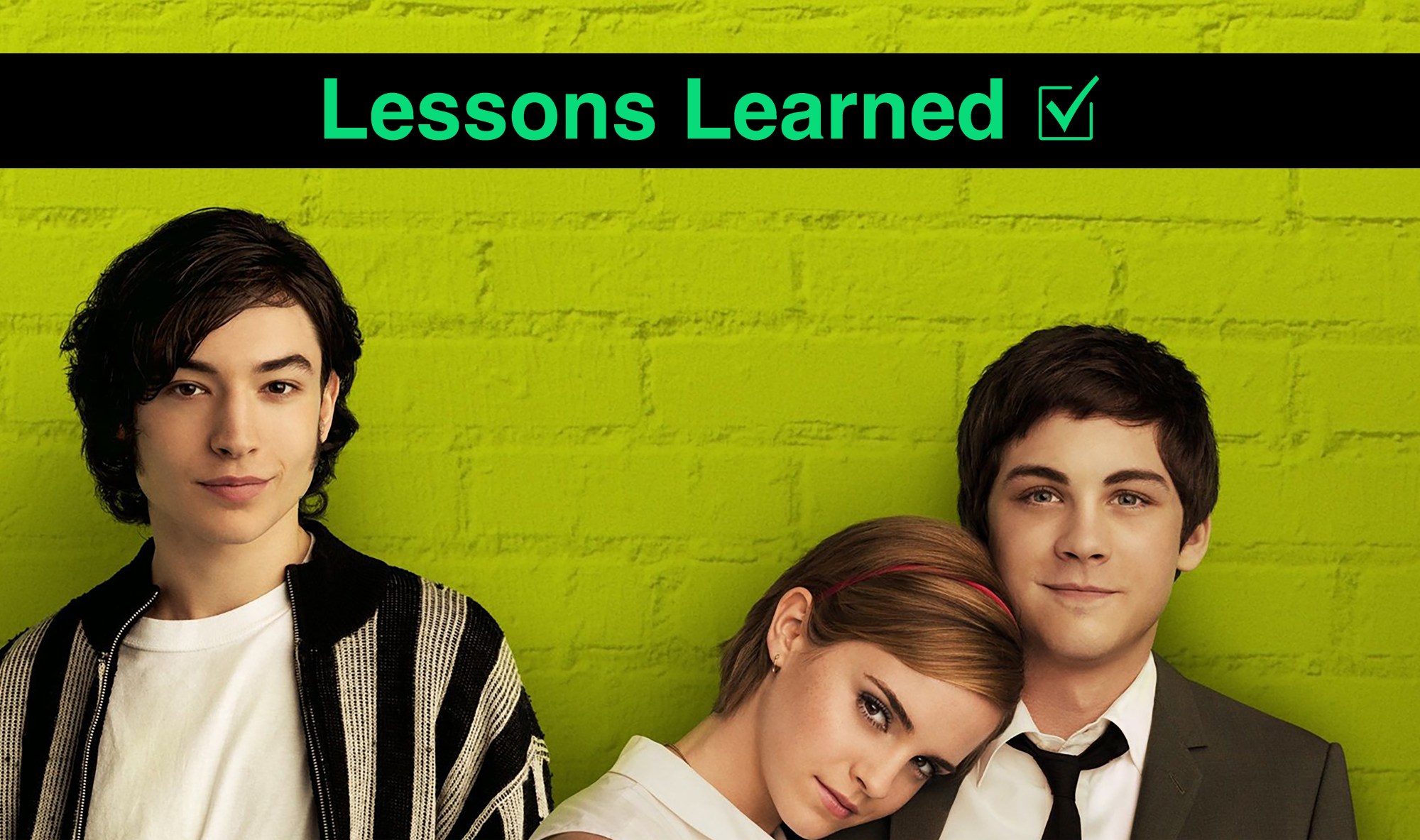
An introvert freshman is taken under the wings of two seniors who welcome him to the real world.
Stephen Chbosky knows exactly what he’s doing. The novel The Perks of Being a Wallflower struck me like lightning in high school and I finished reading the gut-wrenching final pages in the mountains of the Czech Republic. Chbosky’s honesty bleeds through, having adapted his award-winning novel into a screenplay which he then directed. The screenplay holds onto that same honesty. There’s a lot to learn from it.
Here are three lessons learned from reading The Perks of Being A Wallflower screenplay:
#1. WRITE WITH AUTHENTICITY
On the first page of the screenplay, Chbosky makes the choice to display each word of the title in a different font, then glimpses the magical tunnel ending and introduces Charlie, our protagonist:
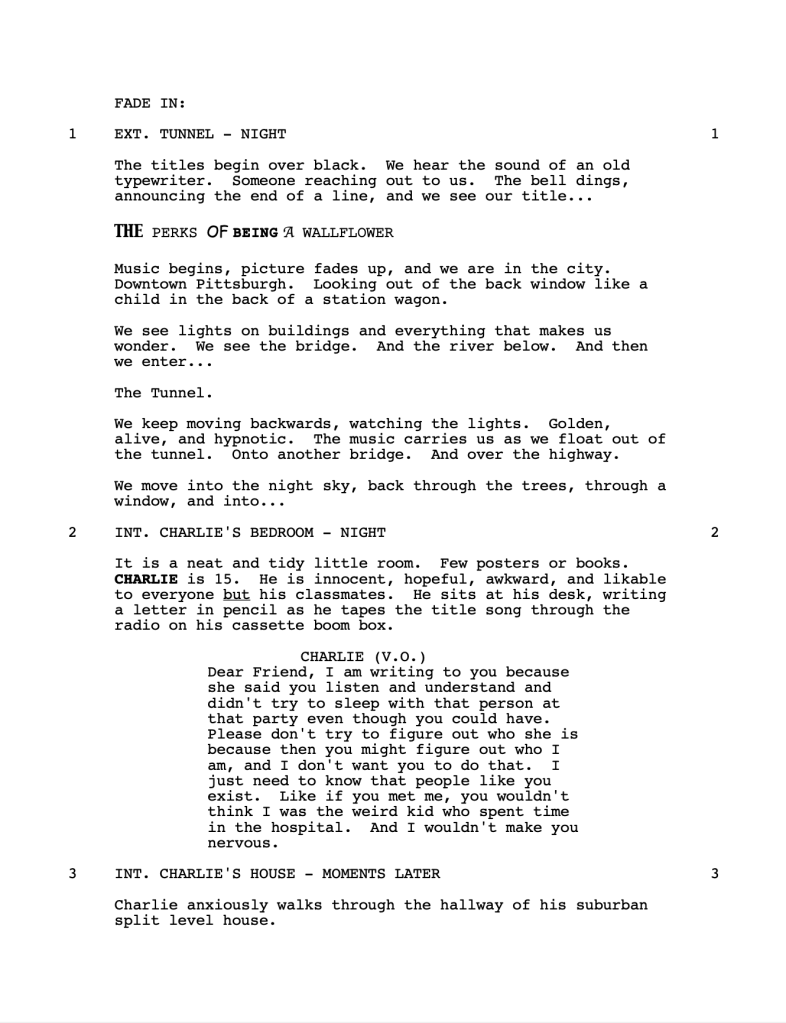
From page one, Chbosky writes in his own voice. He showed with his novel that he is a master of literary craft, then entered the screenwriting world which is a landscape with its own rules and restrictions. We see from page one that Chbosky is willing to break the rules his way, with purpose, to tell the story honestly. Even the title uses different fonts, signaling right away that this story will be a little different.
A line early on reads, “Someone reaching out to us.” This is how the story feels and that feeling is intentional; look at the novel, written as a series of letters, each beginning with the line, “Dear friend…”
The takeaway is simple: write in your own voice.
#2. DON’T SHY AWAY FROM TRAUMATIC ELEMENTS
The way Chbosky handled trauma and adult themes in The Perks of Being a Wallflower:
***spoilers ahead***
What stands out is how the story handles trauma and adult themes. The urgency of these moments are apparent yet are handled with class and dignity. By the end, it is clear that Charlie was sexually abused by his mentally ill Aunt Helen. This trauma hindered Charlie socially and sexually over the years.
His mind tried to protect him. In The Perks of Being a Wallflower, Charlie remembered the trauma of his Aunt’s death but not the recurring abuse. Throughout the story, he is skittish and shy as he tries to get close to people but doesn’t understand how. Charlie’s memories resurface during a moment of stress, leading to a breakdown handled with restraint on the page and onscreen.
The story faces these themes head-on, without losing its sense of care.
#3. WRITE FROM AN OMNISCIENT PERSPECTIVE WHILE HONORING CHARACTERS
On the following page, Charlie and his group of friends are opening secret Santa gifts:
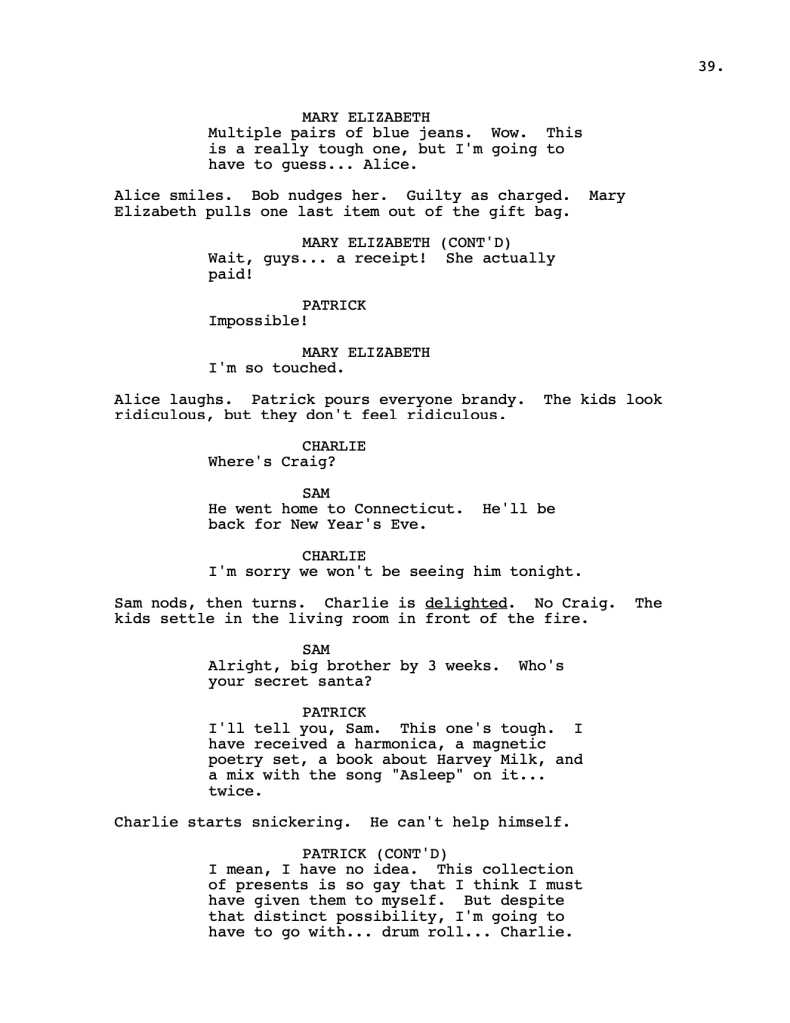
The sentence that stands out here is, “The kids look ridiculous, but they don’t feel ridiculous.” It’s an easy moment to recognize. Whether it was a time when we tried to act older or a time when we hung around people twice our age and attempted to fit in, this moment rings true. It could’ve pulled me out, but instead it deepened my connection to the characters. Chbosky uses an omniscient perspective here, reminding us what it felt like to be a teenager, and it works splendidly.
You can be inside your characters while still seeing the bigger picture.