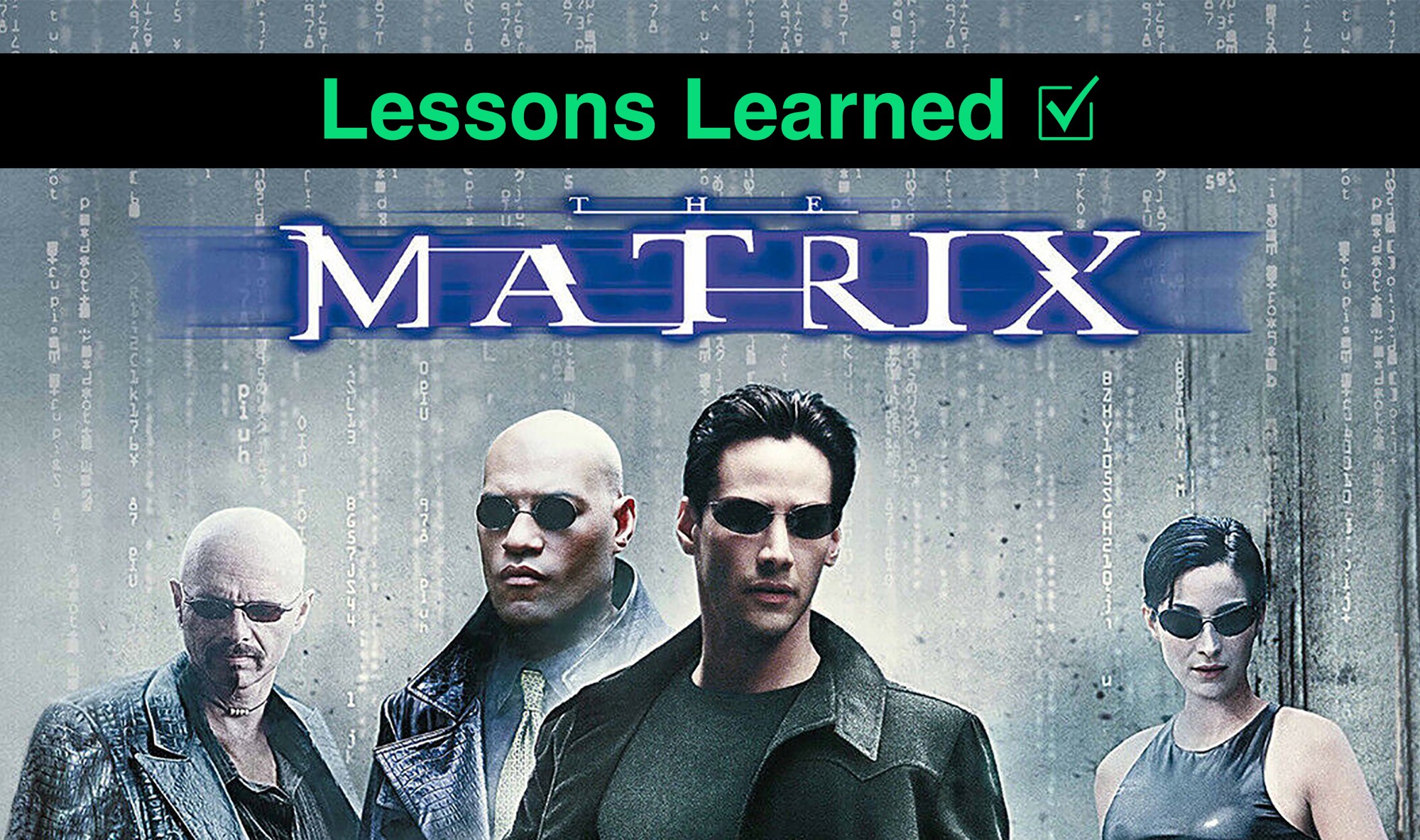
“A computer hacker learns from mysterious rebels about the true nature of his reality and his role in the war against its controllers.”
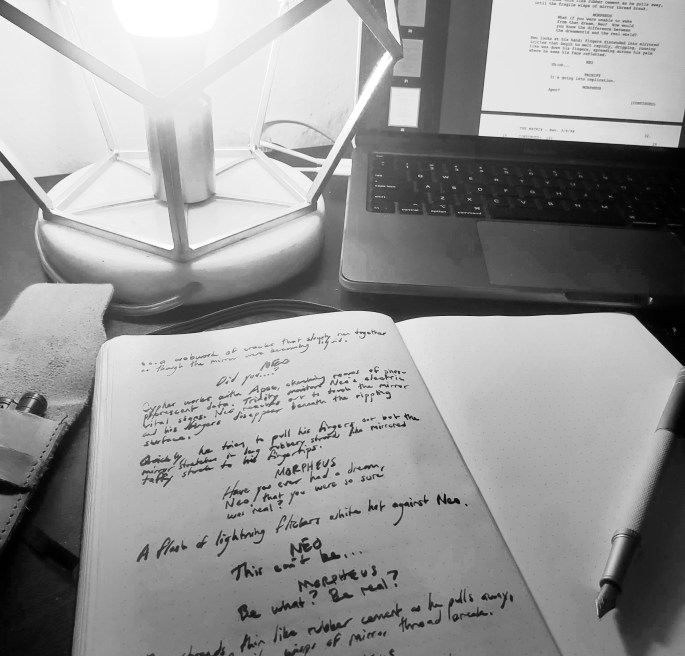
The Matrix is a fascinating film to revisit. I first saw it in elementary school at a sleepover. It was technically off-limits, which probably made it hit even harder. Reading the screenplay felt similar.
Here are three lessons learned from reading The Matrix screenplay:
#1. MAKE COMPLEX IDEAS FEEL SIMPLE
The Matrix deals with massive ideas such as reality, control, and identity, but the writing keeps things clear. The focus is not on spectacle, but rather on character goals, the world, and how information is revealed. With a film of this scope, exposition is necessary. But it never feels heavy. It is paired with visual elements that make it feel natural, almost inviting, like we are learning alongside Neo.
The Wachowskis clearly understand the world they are building inside and out. That depth is felt on the page, even in moments where not everything is explained. You trust that the answers exist.
#2. USE VISUALS TO CARRY MEANING
The Wachowskis rely heavily on visual storytelling. Objects, reflections, and color do most of the work.
The red pill / blue pill scene is the clearest example:
Morpheus opens his hands. In the right is a red pill. In the left, a blue pill.
MORPHEUS
This is your last chance. After this,
there is no going back. You take
the blue pill and the story ends.
You wake in your bed and you
believe whatever you want to
believe.
The pills in his open hands are reflected in the glasses.
MORPHEUS
You take the red pill and you
stay in Wonderland and I show you
how deep the rabbit hole goes.
Simple visuals such as color, reflection, and placement communicate the stakes instantly. You do not need long explanations when the image says it for you. The scene also gives the audience a choice alongside Neo. Stay comfortable or step into the unknown. That idea lands without explanation because the visual does the work.
#3. TRUST COLLABORATION AND REVISION
One thing that stood out was how much changed from script to screen. Lines were tightened. Moments were simplified. Some actions were removed entirely. It reads like a script that invited collaboration. The foundation is strong, but it leaves room for refinement. That balance shows in the final film.
For example, during Morpheus’ interrogation, the script includes a moment where Agent Smith smashes a table as sprinklers rain down. In the film, that beat is gone. It is cleaner. It works better.
Not everything that works on the page needs to stay. Sometimes the stronger choice is the simpler one.