
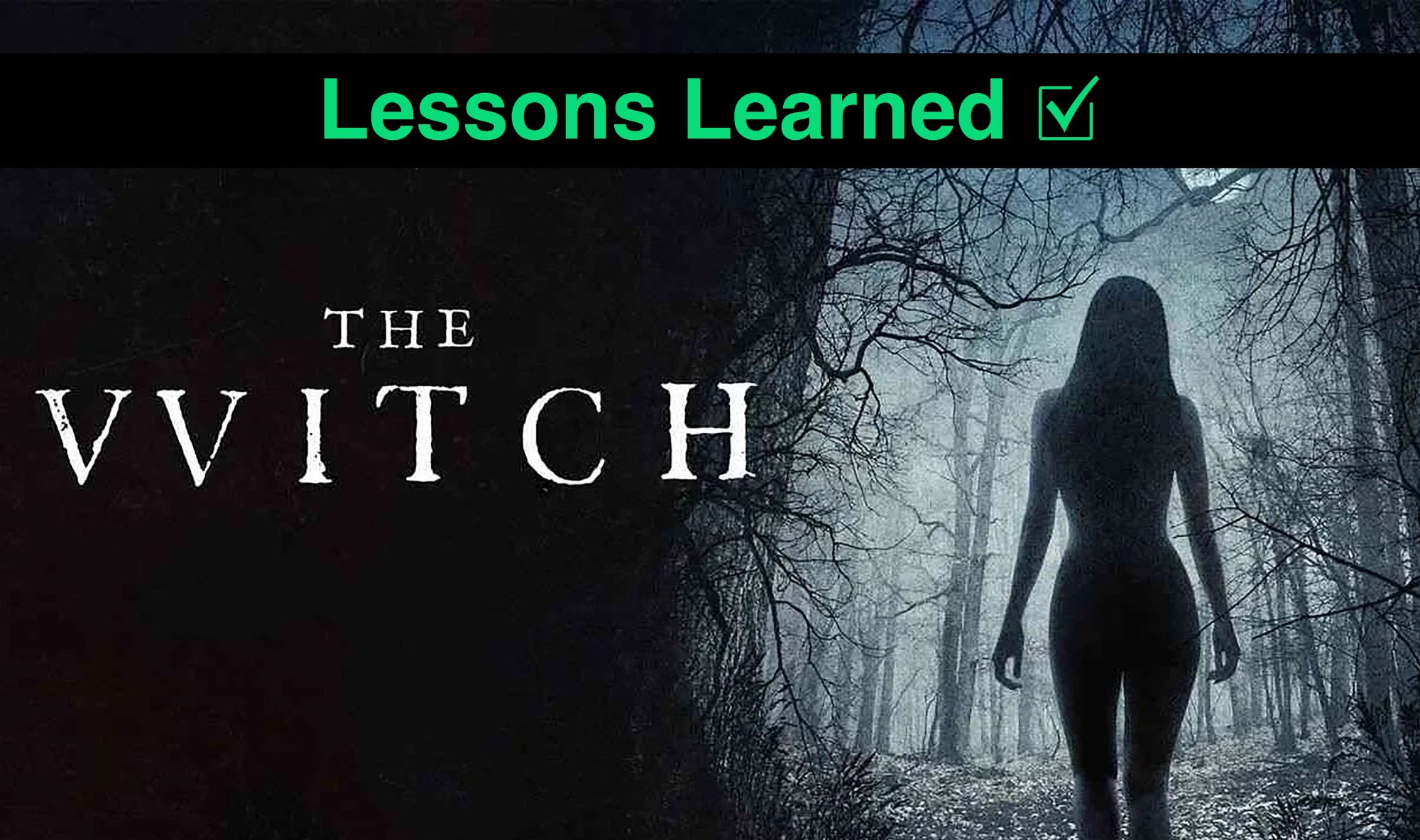
An isolated Puritan family in 1630s New England comes unraveled by the forces of witchcraft and possession.
Robert Eggers made a striking debut with his first feature film, The Witch, originally titled The VVitch: A New-England Folktale. I read the screenplay first, then watched the film after. It holds up. The same dread, the same slow unraveling, just as powerful on the page.
Here are three lessons learned from reading The Witch screenplay:
#1. DO YOUR RESEARCH.
Eggers is known for his attention to detail, and that element heightens this folktale to another level. Rather than feeling like I was reading a horror script, The Witch felt like peeking into a Puritan nightmare. The authenticity made it all the more horrifying. An example is below:
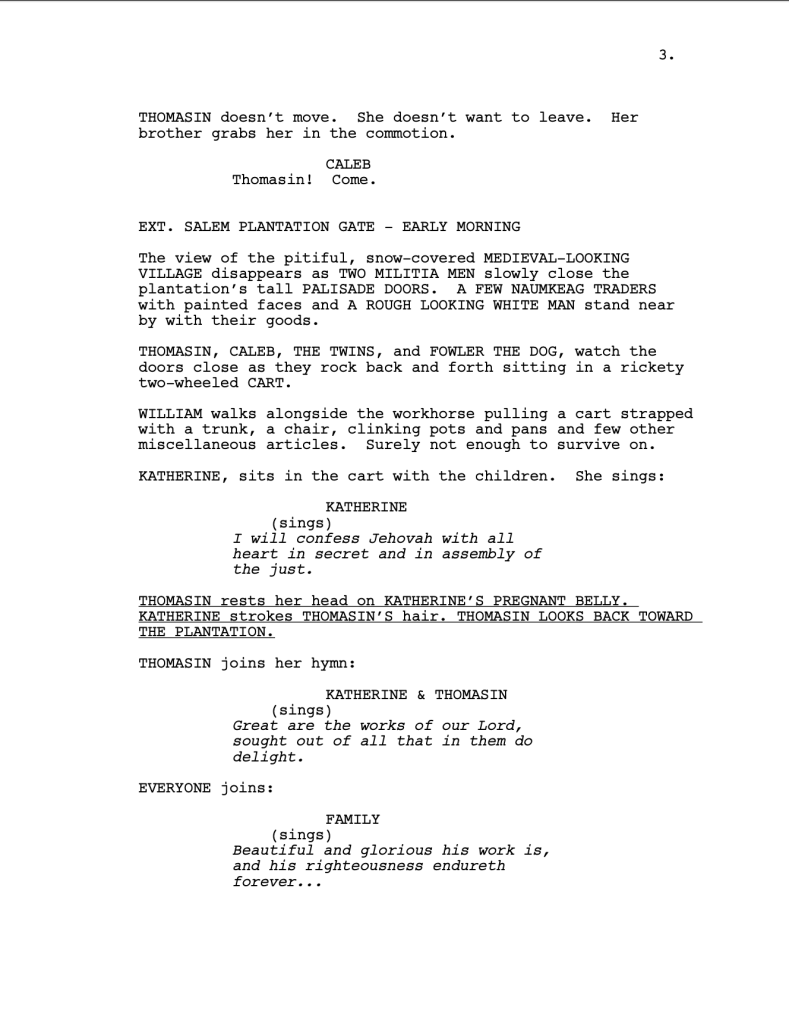
The dialogue does a lot of that heavy lifting. It isn’t cleaned up or modernized. It feels pulled from another time, which forces you to lean in and adjust as a reader. That slight friction makes everything feel more real. And because the world feels real, the horror doesn’t need to overcompensate. It creeps in quietly. By the time things turn, you’re already grounded in it.
Research isn’t just about accuracy, it’s about immersion. When the foundation is strong, you don’t have to convince the audience of anything. They’re already there. That level of detail isn’t decoration. It’s what makes the world feel real enough to break. Watching the film later, nothing felt added. It was already there, baked into the page.
#2. COMMUNICATE PACING ON THE PAGE.
On the following page of The Witch screenplay, Eggers uses intentional pauses, making it clear how the pace will feel onscreen:
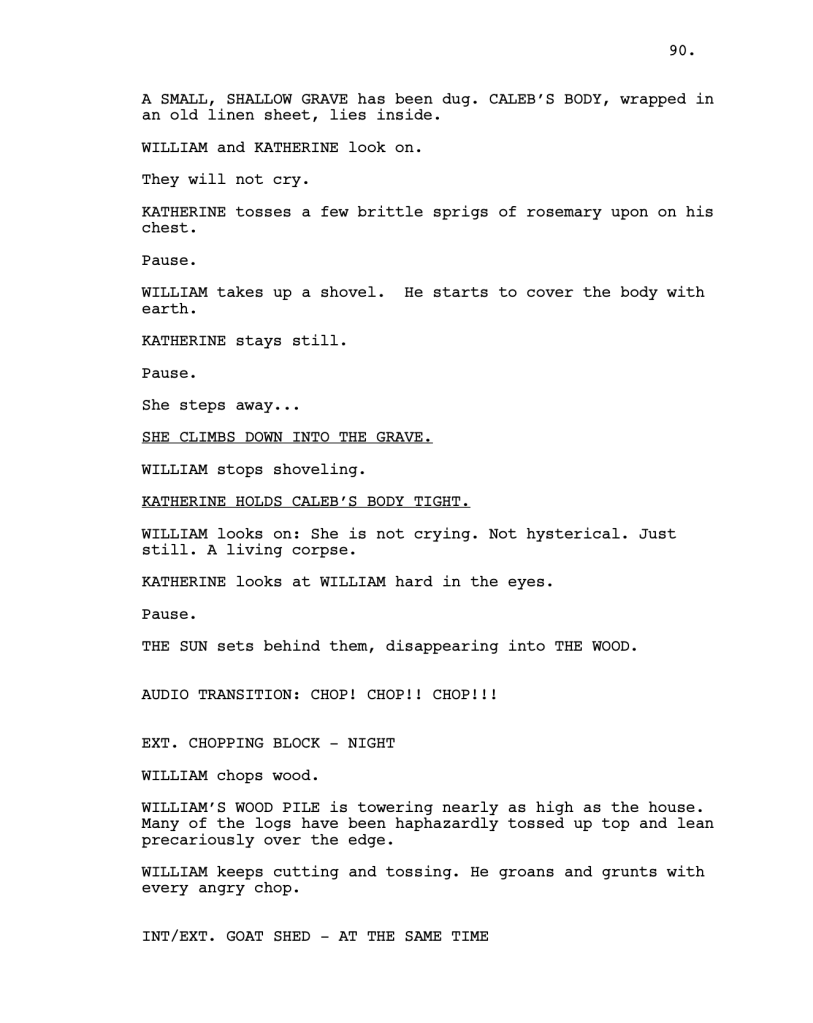
Three pauses. Each given its own line. One of the many things that Eggers does well throughout the screenplay is utilizing white space. These pauses are perfectly placed. As I read, I could feel the tension, the hurt, the emotion beneath the moment.
Other pages of the screenplay utilize a technique I’ve never seen before. Rather than notating silence through descriptive action, Eggers provides the character names with a hyphen instead of dialogue. It communicates silence that speaks a thousand words. Each instance is unique, and it’s a technique I admired. Watching it later, those pauses play exactly as written.
It takes confidence to slow a script down this much and trust the silence to carry weight. Here, it does.
#3. EXPLORE TABOO SUBJECTS.
A quality about The Witch that struck me as I read it was that it uses potentially taboo subjects to serve the story. If these elements were not organic, it would feel strange and out of place, but Eggers only uses them intelligently.
Because of the story’s roots in folktale horror, these choices just work. There are many grotesque moments including the murder of a baby, budding sexuality leading to a witch’s kiss, and a naked woman riding a goat. Each horrifying image is carefully placed for maximum impact.
Besides those specific examples, the entire concept is “taboo.” Witches. Covens. Evil. It’s a heavy, naturally terrifying subject, elevated by Eggers’ use of atmospheric dread and the growing paranoia within the family unit. It’s masterfully executed, and the film never pulls back from any of it.

 Sean Taylor Creates