
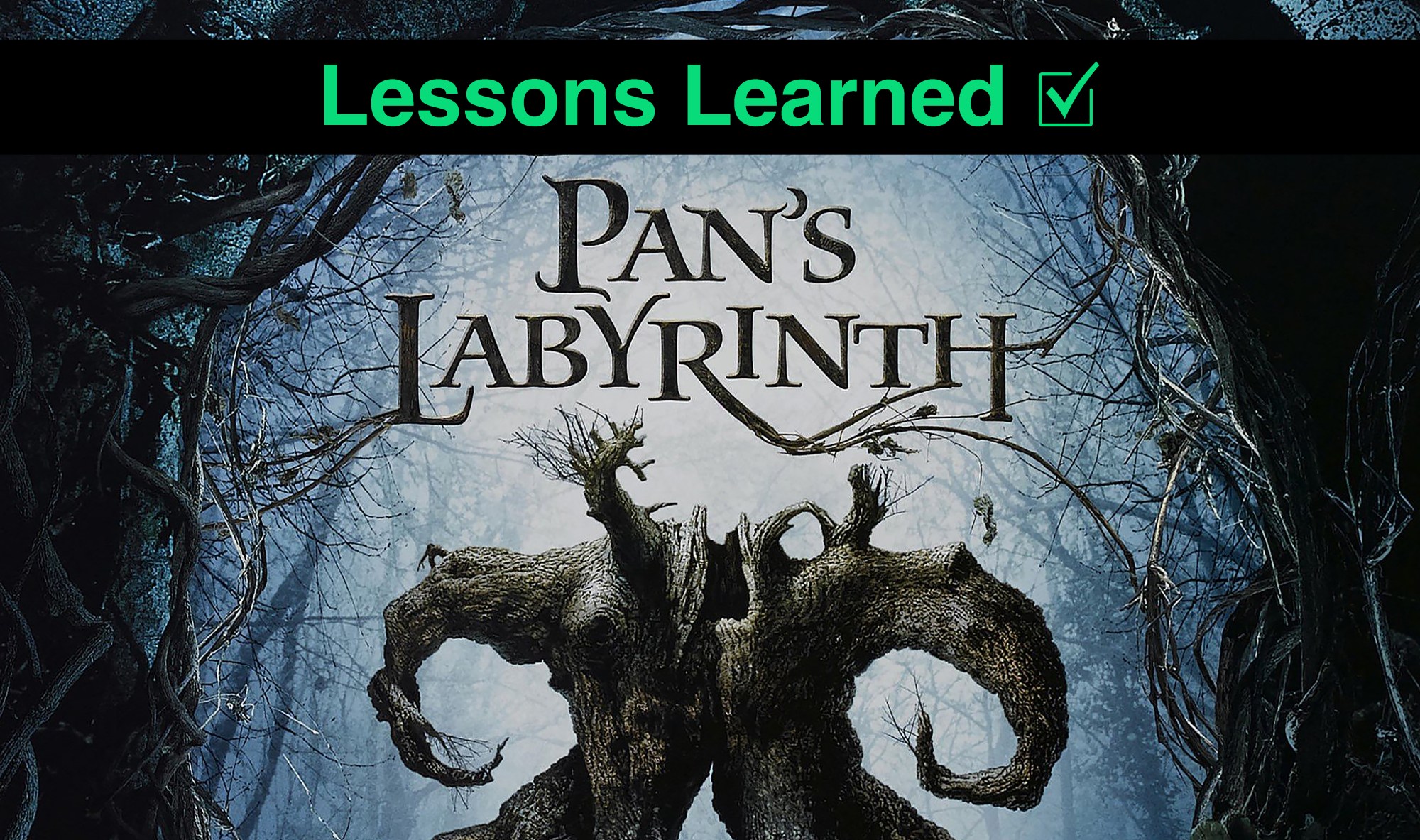
In 1944 Spain, a girl is sent to live with her ruthless stepfather. During the night, she meets a fairy who takes her to an old faun. He tells her she’s a princess, but must prove her royalty by surviving three gruesome tasks.
Pan’s Labyrinth is one of those films that I can’t help but gush about. It’s one of my favorites, and I usually don’t like films that end unhappily. Guillermo Del Toro is a genius who thinks through every element in detail, and it shows.
Here are three lessons learned from reading the Pan’s Labyrinth screenplay:
#1. INFUSE DIALOGUE WITH MAGIC.
OFELIA
…a long, long time ago in a grey, sad country… There was a magic rose that made whoever plucked it immortal…
Guillermo Del Toro exceeds at infusing magic into his films, and it’s clear from the start. Pan’s Labyrinth opens with fairy tale narration, and contrasts the magical world of young Ofelia with the jagged edges of war. Del Toro stated in interviews that the film was based on a nightmare, and that the final film closely resembles what he saw. Such a gift for an artist to take something that frightened them and turn it into a masterpiece.
Magic is felt throughout the screenplay, in the action text as well as the dialogue, growing darker and more ominous to match the oppressive world that Ofelia has been thrust into.
#2. ADD A SENSE OF CHARACTER TO THE LOCATIONS.
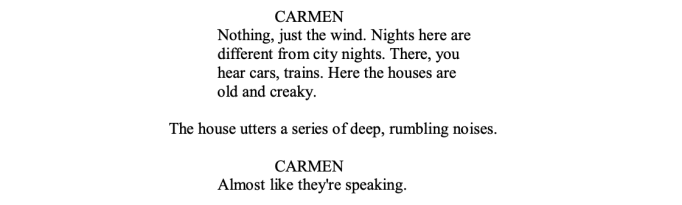
Locations in Del Toro films always feel like living, breathing characters. From writing to production design, he thinks through these elements in detail, and it shows. In Pan’s Labyrinth, Ofelia’s new home is dark, ominous, and cold… The fantasy world contains ambiguous and outright terrifying creatures, but the colors are brighter, the edges softer, more whimsical.
The world of Pan’s Labyrinth feels larger than life, and that is intentional. The furniture, doorways, and more were built bigger than they should be, since the film was meant be experienced from Ofelia’s perspective. What a clever, practical way to invest the audience in her childlike perspective.
Takeaway: as writers, fully explore the locations we’re creating. Are they exciting, unique, and interesting? Do they feel like a necessary character? And bonus: what secrets do they hide?
#3. UNHAPPY / BITTERSWEET ENDINGS CAN BE EXTREMELY EFFECTIVE.
As I said earlier, I am not usually a fan of unhappy endings, but in some cases, I think it couldn’t be any other way. Pan’s Labyrinth is one of those instances.
FAUN
You will give up your throne
for him? He who has caused
you such misery, such
humiliation?
The Faun is a fascinating character, played by the brilliant Doug Jones (who also played The Pale Man in the film). Ofelia is never sure whether she can trust him, and neither can we, as the audience. It can be frustrating, but somehow feels more grounded and real to what you’d expect from a fairytale based on a nightmare.
The ending works for several reasons…
First, it was foreshadowed at the start of the film, with a shot of Ofelia lying on her side, blood flowing backward into her nose. The audience knew this was coming. This one small creative decision makes a big difference; the audience has time to digest the information.
Second, the film is dark and violent throughout. The audience has to stomach a lot before reaching the end, so by the time the climactic scene rolls around, it feels in line with the tone.
Third, it is a selfless act. Selflessness and martyrdom are frequently admired and make characters easy to root for in film and television. A timeless and mythic concept.

 Sean Taylor Creates