
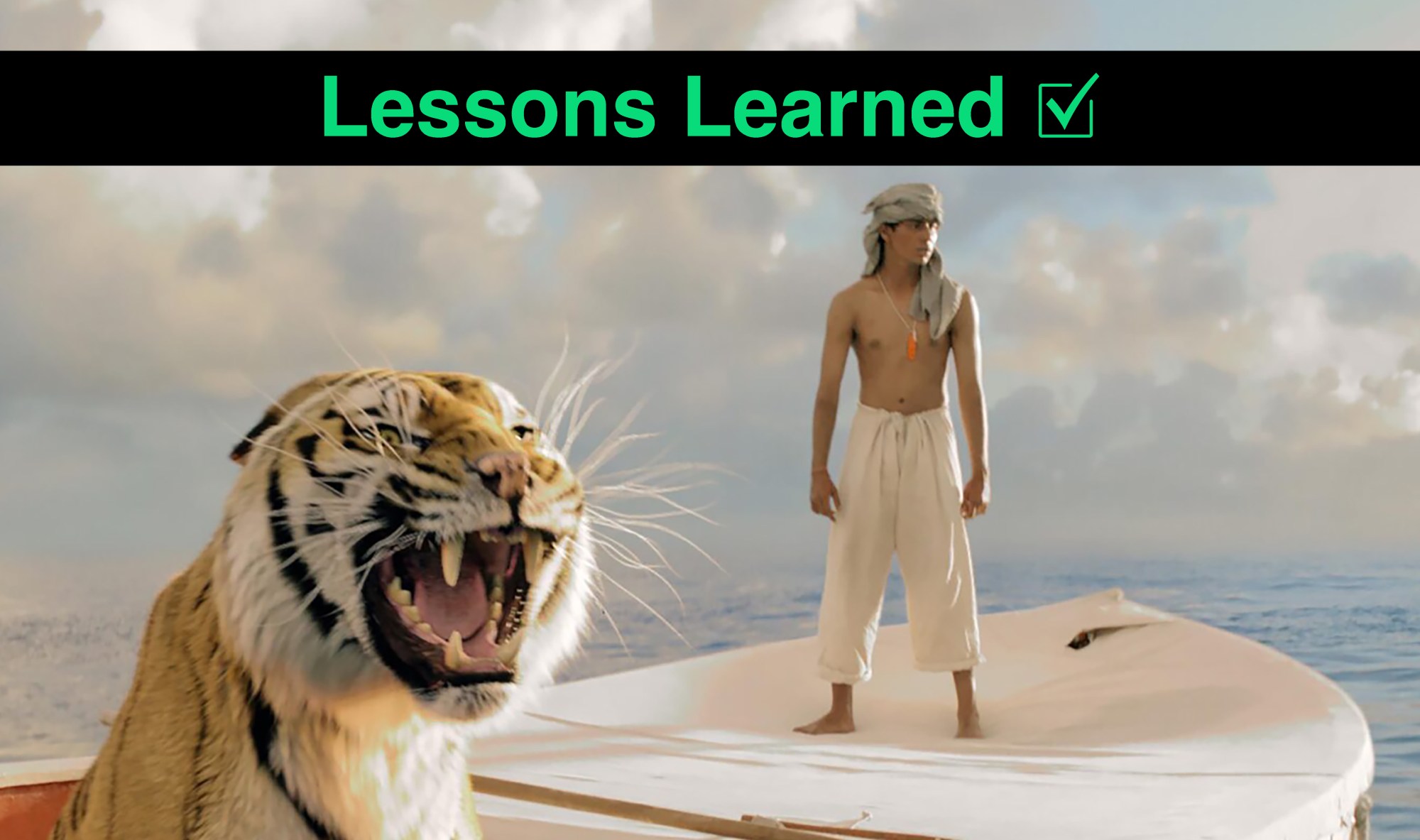
A young man who survives a disaster at sea is hurtled into an epic journey of adventure and discovery. While cast away, he forms an unexpected connection with another survivor: a fearsome Bengal tiger.
Life of Pi is a strikingly unique story, the novel by Yann Martel considered to be unadaptable. Yet David Magee’s screenplay is sleek and epic, adding visual elements from other stories to craft a cinematic experience on the page. It is novelistic in its approach, with long paragraphs and heavy description, but reads beautifully.
Here are three lessons I learned from reading the Life of Pi screenplay:
#1. LIFT ELEMENTS FROM OTHER STORIES. Pi awakes in the night to see the water glowing with bioluminescent plankton and a whale appears:
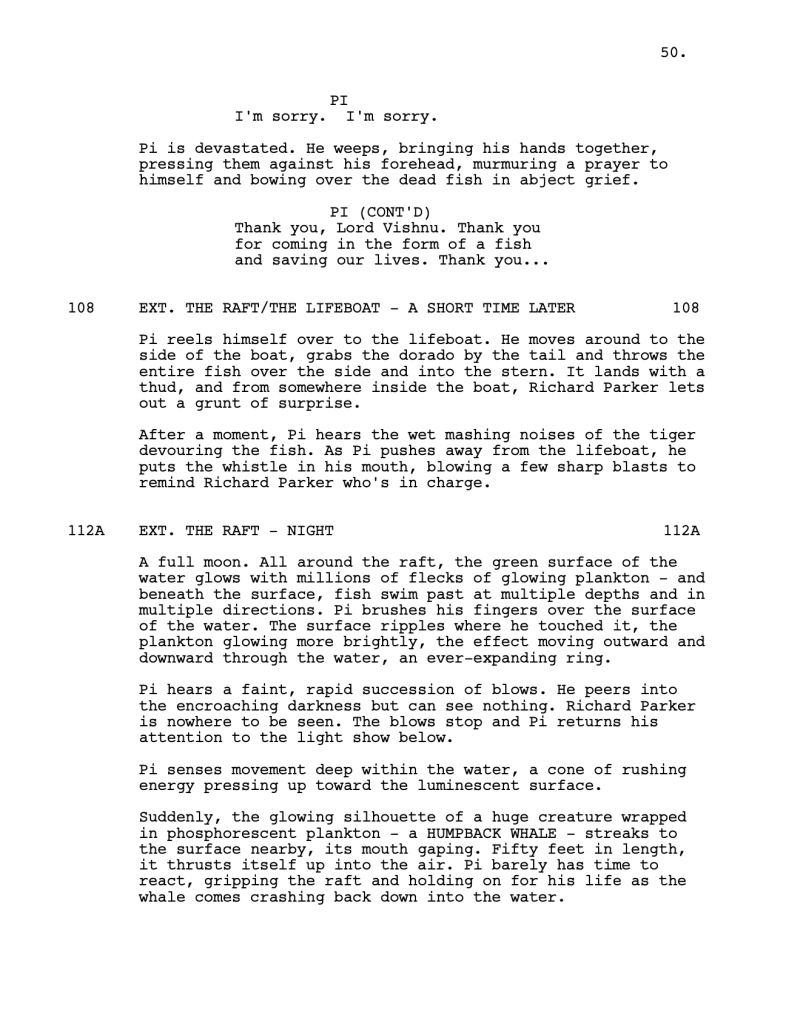
The scene above was not in the original Life of Pi novel. Steven Callahan, a true survivor who was stranded at sea when the boat he built himself sank in the Atlantic (his story is detailed in his memoir Adrift: Seventy-six Days Lost at Sea) was brought on set of Life of Pi to advise and assist in getting the details right. Callahan told the filmmakers the story of his experience with bioluminescent plankton and a whale breaching through, nearly sinking his raft. Lo and behold, it ended up in the film and was heavily featured in marketing.
“A full moon. All around the raft, the green surface of the water glows with millions of flecks of glowing plankton – and beneath the surface, fish swim past at multiple depths and in multiple directions. Pi brushes his fingers over the surface of the water. The surface ripples where he touched it, the plankton glowing more brightly, the effect moving outward and downward through the water, an ever-expanding ring.”
Continued on the page above, the humpback whale breaches the surface of the glowing plankton and the scene worked splendidly in the final film. In my opinion, this was an excellent addition to the screenplay. As Picasso famously said, “Good artists copy, great artists steal.”
Be influenced by the world around you. Listen. Absorb stories.
#2. WRITE IT TO BE A GOOD READ. On the following page of the Life of Pi screenplay, Pi attempts to rescue a swimming figure only to find out that it is Richard Parker, the tiger:
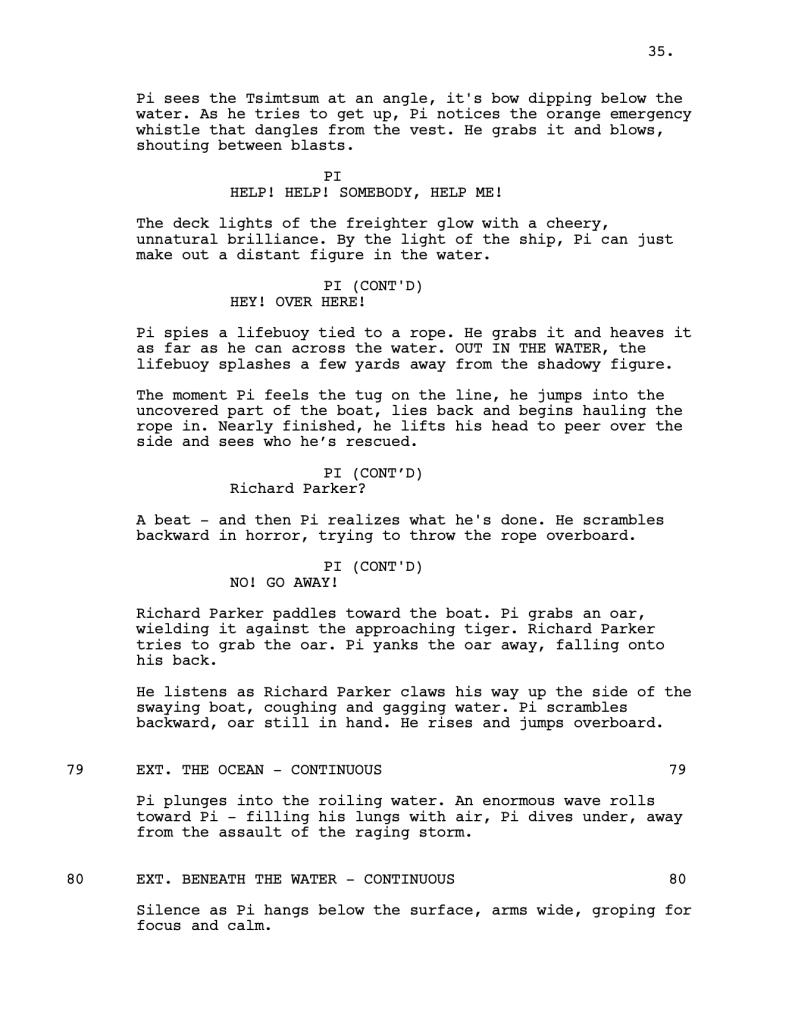
David Magee wrote the Life of Pi script in a way that reads easy out loud. Each sentence, paragraph, vignette, and scene transition flows into the next without confusion or hesitation. As stated above, the style of this screenplay is novelistic but works well. The danger is palpable. The settings are clear. We can feel these moments on the page.
Write in a palpable, readable style.
#3. BALANCE LIGHT AND DARK.
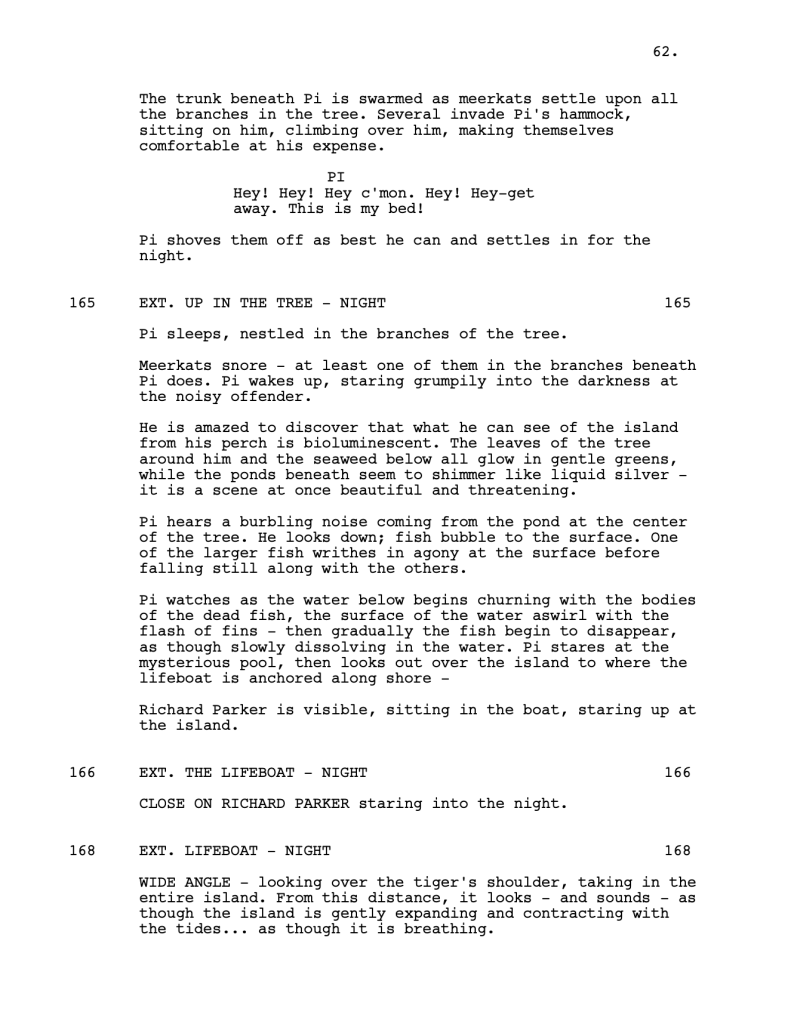
The above scene is dark and mysterious yet Pi is safe. The tension is low. In contrast to the immersive ocean elements, we view this scene through Pi as a voyeur in a strange land. Safe on a tree branch, “Pi watches as the water below begins churning with the bodies of the dead fish, the surface of the water aswirl with the flash of fins…” Unusual, terrifying natural elements blended into the “oasis” that Pi found. Darkness in the light. Simply balancing Yin & Yang on the page evens out the tone of Life of Pi and keeps the audience engaged.
Balance is essential to life and in turn, storytelling. The darkness and the light. Yin and Yang. Balance.

 Sean Taylor Creates
One thought on “3 Lessons Learned from Reading the LIFE OF PI Screenplay”
Comments are closed.